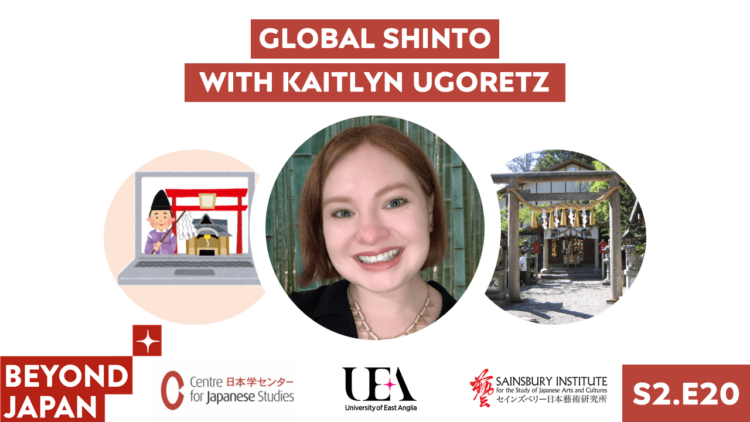
EALCS Ph.D. candidate Kaitlyn Ugoretz recently sat down with the Beyond Japan podcast to discuss the global appeal of Shinto in the digital era. Kaitlyn introduces online Shinto communities as old as the internet itself, as well as the many international faces of Shinto, from official shrines in the USA to localised rituals and Marie Kondo’s brand of spiritualism. Click here to stream the podcast, or find it on your favorite podcast app.

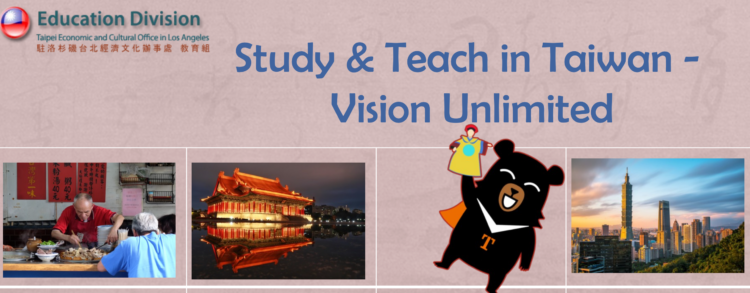
To encourage international students and individuals to undertake Mandarin Chinese language study in Taiwan, the Ministry of Education (MOE) of the Republic of China (Taiwan) established the MINISTRY OF EDUCATION HUAYU ENRICHMENT SCHOLARSHIP (HES) Program. The application period is February 1 – March 1, 2022.
In addition to the Huayu Enrichment Scholarship (HES) and starting this year, the Ministry of Education launched the Taiwan Foreign English Teacher Program (TFETP) to expand the recruitment of English teachers and teaching assistants. Please see the links below for more information on both of these wonderful opportunities:
Keita C. Moore, one of EALCS’s many talented graduate students, has published a review of an important work in global gaming studies, Open World Empire by Christopher B. Patterson, in the Journal of Asian Studies, the premier journal in our field. Click here to read his review. Congratulations, Keita!

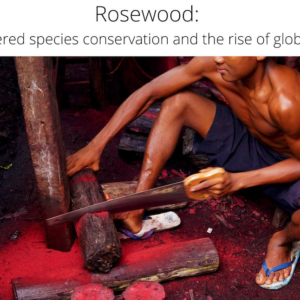
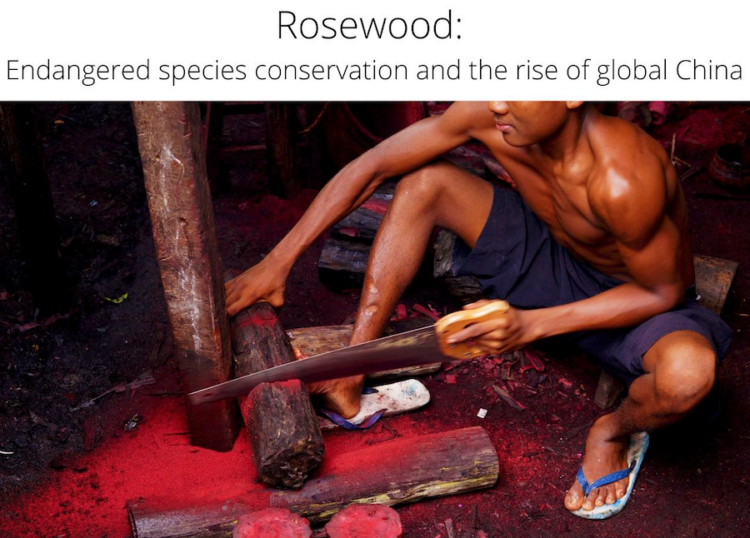
Rosewood is the world’s most trafficked endangered species by value, accounting for larger outlays than ivory, rhino horn, and big cats put together. Nearly all rosewood logs are sent to China, fueling a $26 billion market for classically styled furniture. Vast expeditions across Asia and Africa search for the majestic timber, and legions of Chinese ships sail for Madagascar, where rosewood is purchased straight from the forest. The international response has been to interdict the trade, but this misunderstands both the intent and effect of China’s appetite for rosewood, causing social and ecological damage in the process. Drawing on fieldwork in China and Madagascar, Annah Zhu upends the pieties of Western-led conservation, offering a glimpse of what environmentalism and biodiversity protection might look like in a world no longer ruled by the West.
Annah Zhu is an Assistant Professor of environmental globalization at Wageningen University in the Netherlands. She received her PhD in society and environment from the University of California, Berkeley and her Masters in environmental management from Duke University. She is a veteran of the United Nations’ Environment Program in Geneva, and a former Peace Corps volunteer in Madagascar. Her work has been published in Science, Geoforum, Political Geography, Environment International, and American Ethnologist.
Every year, the Koichi Takashima Graduate Student Grant is given to one of the most promising graduate students in Japanese Cultural Studies. This year, Winni Ni impressed the selection committee with her pursuit of an exceptionally innovative and theoretically sophisticated dissertation titled, “Forms of Relating –The Representation of Intersubjectivity in Contemporary Border-crossing Literature (ekkyō bungaku) in Japan.” Border-crossing literature by contemporary authors who are non-native Japanese speakers, she writes, is commonly known for its polyphonic texts. Scholars have argued that authors create polyphonic texts to mirror and express the multi-lingual identities that resist being pinned down to any given category. This dissertation proposes to radically rethink border-crossing literature by focusing on the representation of relationships between the self and others within a community. Ni examines the narrative’s representations of ways of relating in various border-crossing contexts, exploring how the characters’ self-perceptions are co-constructed with other subjects in the present and in the past. She asks how border-crossing literature represents that process of co-construction using specific rhetorical forms and linguistic expressions, and how it creates a body of knowledge of intersubjective encounters across social, cultural, and linguistic boundaries.

Through close readings of the border-crossing fictions by Yang Yi (b. 1964), On Yūjū (b. 1980), and Sagisawa Megumu (1968–2004), Ni aims to elucidate the literary rendering of self-emergence through constant and dynamic exchanges with others. She argues that border-crossing literature provides an alternative cultural notion of happiness—one that is grounded in mutual recognition, psychological belonging, and trust. Border-crossing literature achieves this by representing moments of mutual recognition as transformative, enlivening, and deeply pleasurable: they are what the narratives and the characters return to again and again, through highly stylized plots and affectively engaging expressions. Combining literary analysis with psychological and social theories of self-formation, Ni intends to open up new perspectives on Japanese border-crossing literature and to encourage others to use these polyphonic narratives to imagine how individuals could live with their explicit differences—better and together.