Unhappy woman giving a thumbs down and holding a book

“The Worst Chinese Poetry” featured in The Current

“The Worst Chinese Poetry” event organized by Thomas Mazanec, Xiaorong Li, and Hangping Xu has been featured in the Current, UCSB’s general news outlet. Read the story here: https://www.news.ucsb.edu/2021/020304/lyrical-losers
An excerpt:
“By calling something ‘good,’ you are drawing a line, saying some things are good, some are bad,” Mazanec said. “That line was drawn differently in different times and different places. There are all sorts of considerations that go into drawing that line: aesthetic, moral, social and political standards that change with time. By investigating these standards, we can learn a lot about Chinese literary history.”
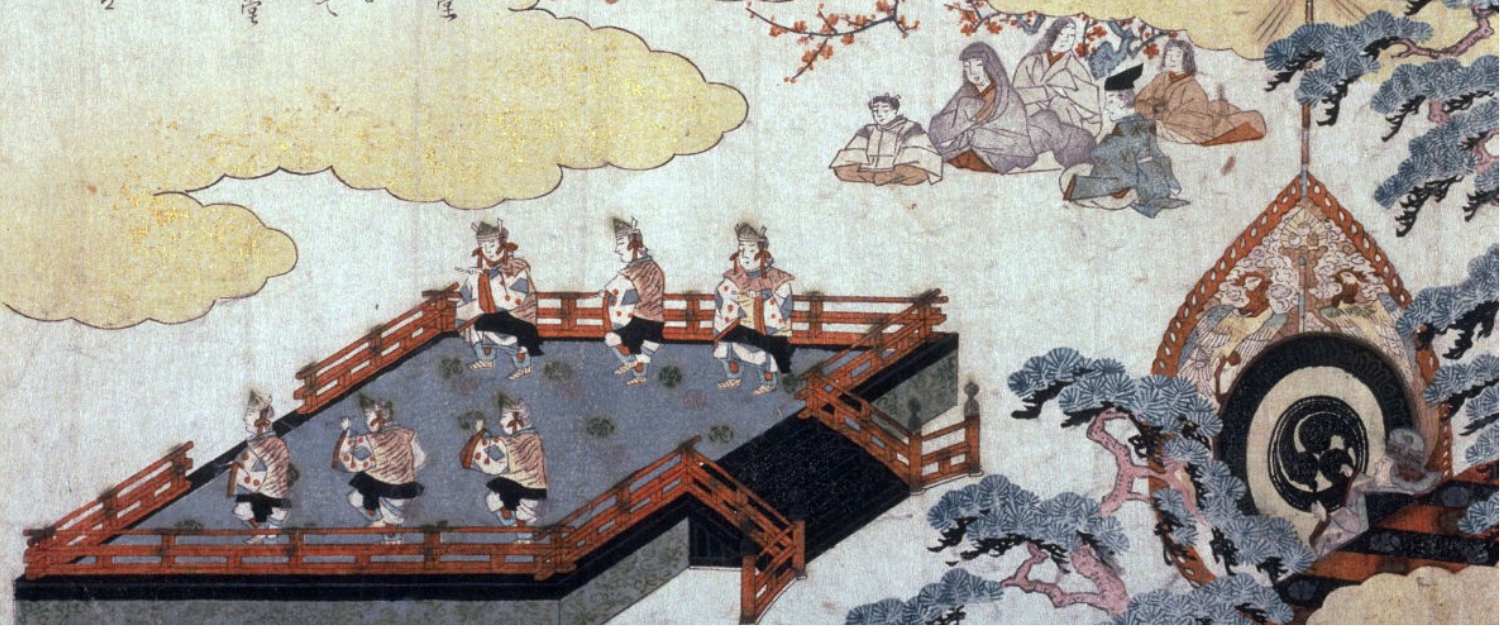
Gagaku Header

Our Gagaku Critical Interventions Lab is Going Virtual!

Our long-awaited Gagaku Critical Interventions Lab is going virtual!

“Gagaku: Cultural Capital, Cultural Heritage, and Cultural Identity” will discuss Gagaku (the ceremonial music of the imperial court and the main Buddhist temples and Shinto shrines in Japan) as “cultural capital” in its intellectual, political, and economic implications, as well as its transnational ramifications, for the definition of cultural heritage and the formation of cultural identity in Japan from the Edo period until today.

This Critical Interventions Lab gathers international scholars and performers engaged in cutting-edge research on the cultural history of Gagaku, with special focus on the Edo period and the modern era. Languages of the presentations and discussions are English and Japanese.

We have created an online platform that includes video presentations, texts, videos of performances, and live workshops and discussions, in the hope that this material will become an educational resource to learn about Gagaku in its various aspects.

Check out our participants, program, and resources here: http://gagaku.eastasian.ucsb.edu

This Critical Interventions Lab is organized by Fabio Rambelli (International Shinto Foundation Endowed Chair in Shinto Studies) as part of “Japanese Culture En Route: Transnational Currents and Connections in Japanese Performing Traditions” funded by a Japan Foundation Institutional Project Support grant (Ref. No. 10121178).

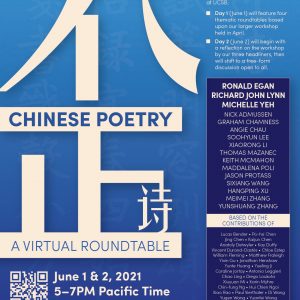
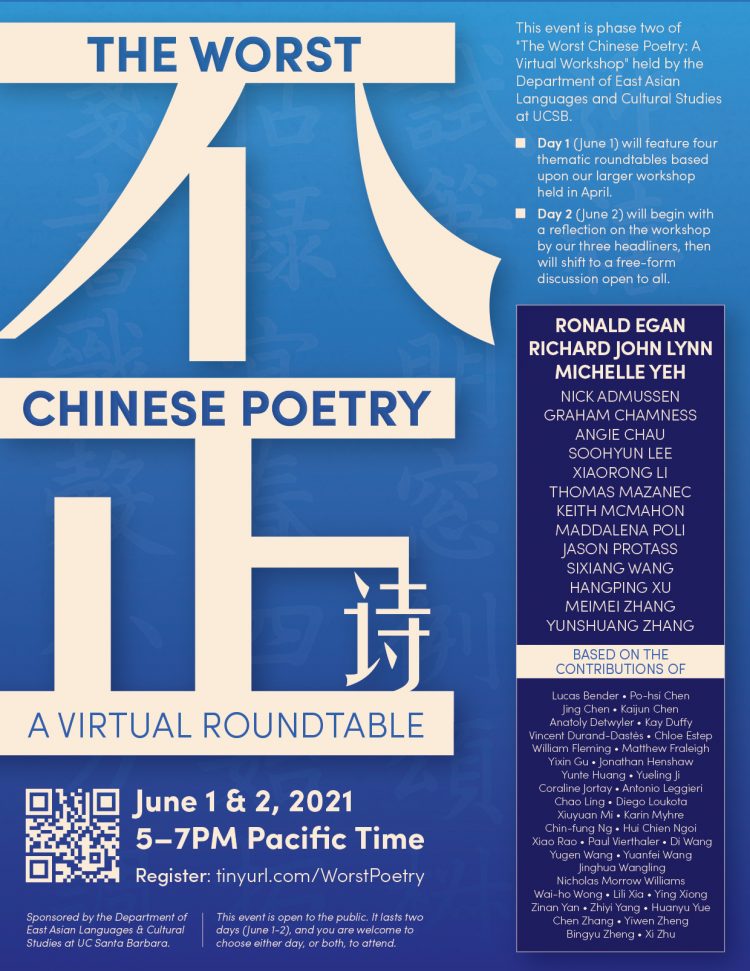
Flyer for The Worst Chinese Poetry for June 1 & 2, 2021, 5-7PM

The Worst Chinese Poetry: A Virtual Roundtable

Join us for phase two of “The Worst Chinese Poetry: A Virtual Workshop.” This will be two-day roundtable discussion open to the public, following up on phase one, which was a series of fourteen miniature workshops held in early April.

Register here: https://tinyurl.com/WorstPoetry

Organized by our three Chinese literature specialists (Thomas Mazanec, Xiaorong Li, and Hangping Xu), the goal of this project is to rethink Chinese literary history through negative examples. It seeks to interrogate the aesthetic, social, moral, and political criteria by which Chinese-language poems were considered “bad” in different times and places. Selected contributions will be compiled to create a book, The Worst Chinese Poetry: A Critical Anthology.

  • Day 1 (June 1) will feature four thematic roundtables based upon our larger workshop held in April.
  • Day 2 (June 2) will begin with a reflection on the workshop by our three headlines, then will shift to a free-form discussion open to all.

Detailed schedule:

June 1
  • 5:00–5:05: Opening Remarks by Thomas Mazanec
  • 5:05–5:30: Vulgarity and Frivolity, featuring Xiaorong Li, Keith McMahon, and Jason Protass
  • 5:30–5:55: Commenting, Framing, and Judging, featuring Richard John Lynn, Maddalena Poli, Hangping Xu, and Yunshuang Zhang
  • 5:55–6:05: Break
  • 6:05–6:30: Appropriations and Aesthetics, featuring Graham Chamness, Soohyun Lee, Michelle Yeh, and Meimei Zhang
  • 6:30–6:55: Foreignness and Chineseness, featuring Nick Admussen, Angie Chau, and Sixiang Wang
June 2
  • 5:00-5:05: Welcome by Thomas Mazanec
  • 5:05-5:35: Reflections by Ronald Egan, Richard John Lynn, and Michelle Yeh
  • 5:35-5:55: Discussion between Egan, Lynn, and Yeh
  • 5:55-6:05: Break
  • 6:05-6:55: Open Discussion moderated by Thomas Mazanec, Xiaorong Li, and Hangping Xu

We hope to see you there!

Sponsored by the Department of East Asian Languages & Cultural Studies. Poster designed by Q. Z. Lau.

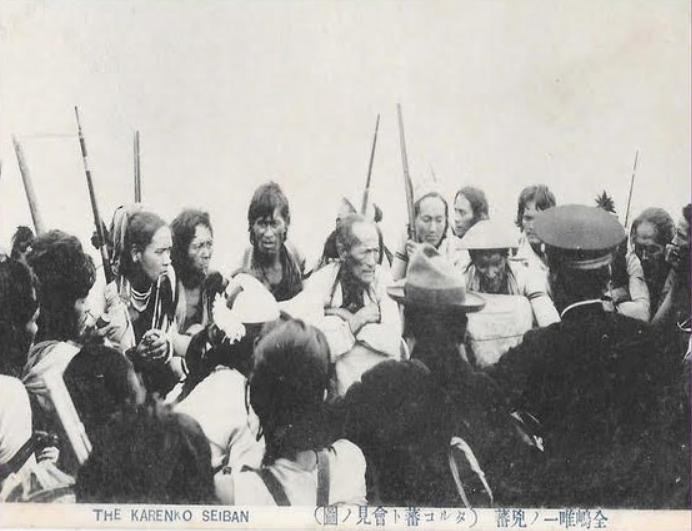
The Karenko Seiban

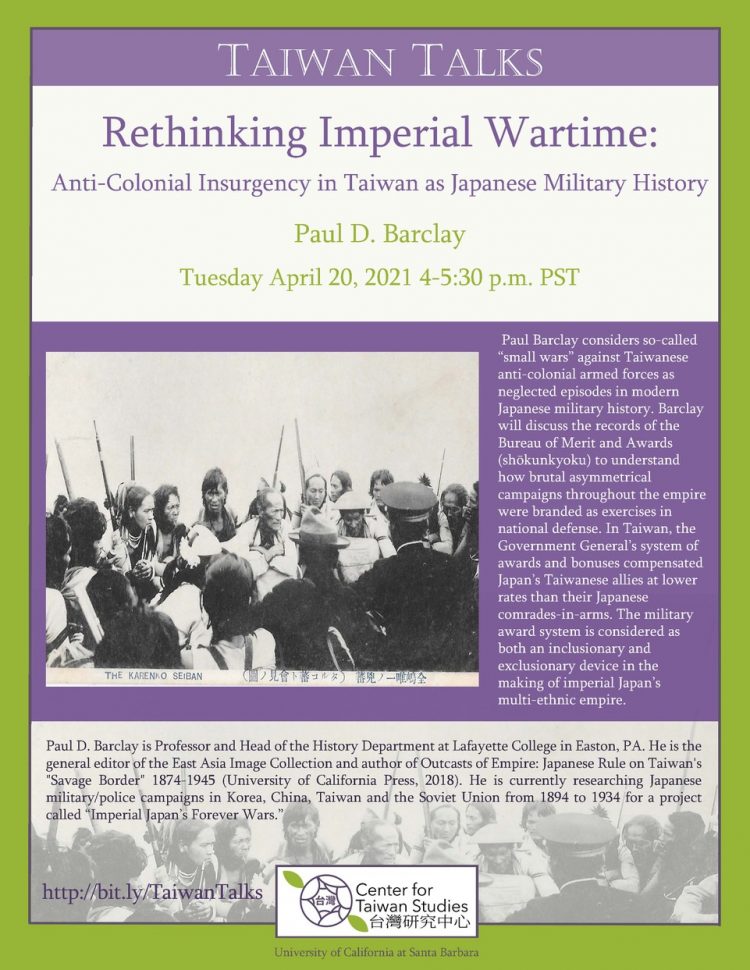
Taiwan Talk: Paul D. Barclay on “Rethinking Imperial Wartime”

Join our Center for Taiwan Studies for a Taiwan Talk with historian Paul D. Barclay (Lafayette College) entitled “Rethinking Imperial Wartime: Anti-Colonial Insurgency in Taiwan as Japanese Military History”!

Barclay considers so-called “small wars” against Taiwanese anti-colonial armed forces as neglected episodes in modern Japanese military history. He will discuss the records of the Bureau of Merit and Awards (shōkunkyoku) to understand how brutal asymmetrical campaigns throughout the empire were branded as exercises in national defense. In Taiwan, the Government General’s system of awards and bonuses compensated Japan’s Taiwanese allies at lower rates than their Japanese comrades-in-arms. The military award system is considered as both an inclusionary and exclusionary device in the making of imperial Japan’s multi-ethnic empire.

Date: Tuesday, April 20th, 2021
Time: 4-5:30 PM PST
Zoom link:http://bit.ly/TaiwanTalks

Paul D. Barclay is Professor and Head of the History Department at Lafayette College in Easton, PA. He is the general editor of the East Asia Image Collection and author of Outcasts of Empire: Japanese Rule on Taiwan’s “Savage Border” 1874-1945 (University of California Press, 2018). He is currently researching Japanese military/police campaigns in Korea, China, Taiwan and the Societ Union from 1894 to 1934 for a project called “Imperial Japan’s Forever Wars.”

Group of people standing for a portrait

Taiwan Makes History I: The Gender of Empire

Join us for the first event in the Center for Taiwan Studies three-part panel series Taiwan Makes History on “The Gender of Empire,” guest directed and moderated by Kirsten Ziomek (Adelphi University)! 

We will welcome historians Fang Yu Hu (University of Tennessee at Chattanooga), Tadashi Ishikawa (University of Central Florida), and Sayaka Chatani (National University of Singapore) to discuss how the lens of gender can change our understanding of the Taiwanese colonial research. The panelists will introduce their current research on how the Japanese colonial government in Taiwan attempted to shape and create gender norms and practices. They will discuss methodologies for uncovering how Taiwanese men and women mediated, responded and contested idealized norms and forged their own paths. What were the competing notions of Taiwanese femininity and masculinity circulating at this time? What larger conclusions can be drawn about the experience of the Taiwanese versus other colonial peoples throughout the Japanese empire and beyond?

Date: Tuesday, April 13th, 2021
Time: 4-5 PM PST
Zoom link: http://bit.ly/TaiwanTalks