Recent News

IHC Funding Award Winners, Winter 2021, orange banner

Yan Liu Wins Interdisciplinary Humanities Center Award

Congratulations to our graduate student Yan Liu for receiving a Visual, Performing, and Media Arts award from the Interdisciplinary Humanities Center for his project “Hong Kong at the Crossroads”!
Here is a description of his project:
Since February 2019, the Anti-Extradition Law Amendment Bill Movement in Hong Kong had continued unabated until the first half of 2020, when the COVID-19 pandemic broke out and a new national security law was passed. The Movement, therefore, has entered a new era. With Hong Kong at the crossroads, protesters have been trying to find out ways to effect political change while abiding by the law. This project intends to produce a documentary that offers the latest and most comprehensive account of Hong Kongers’ experiment with innovative forms of protest and assembly against the renewed backdrop.
Read more about all the IHC graduate awards (which include EALCS-affiliated project Gaming+) here:
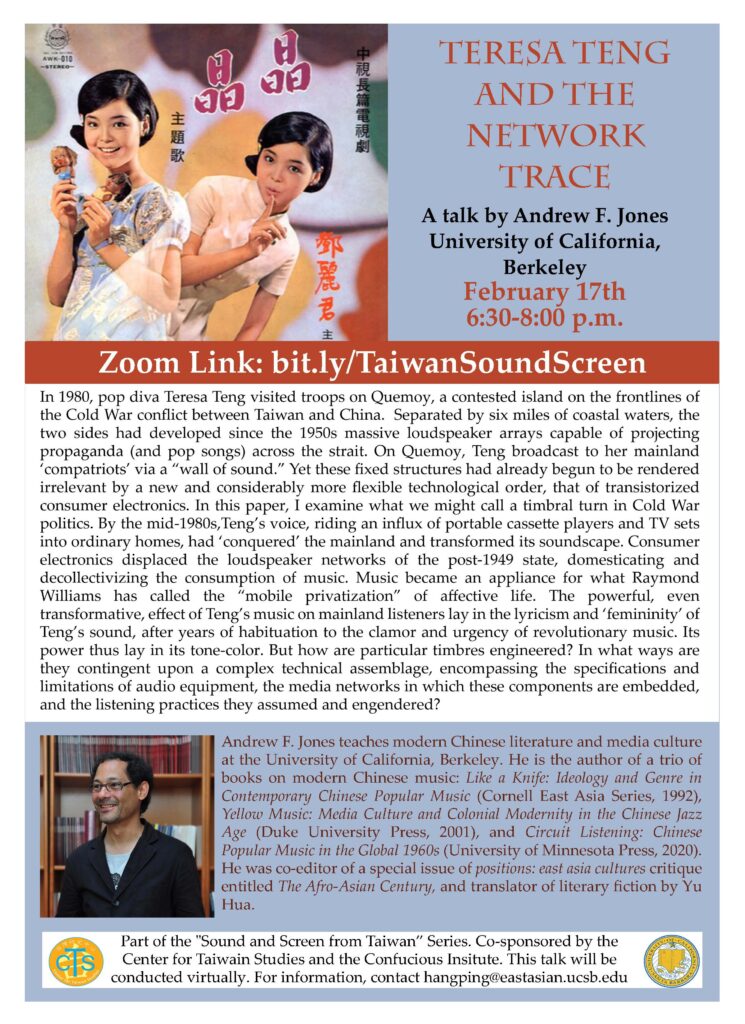
Flyer for "Teresa Teng and the Network Trace" at UC Berkeley by Andrew F. Jones on 2/17 at 6:30-8PM

Lecture Series: Sound and Screen from Taiwan

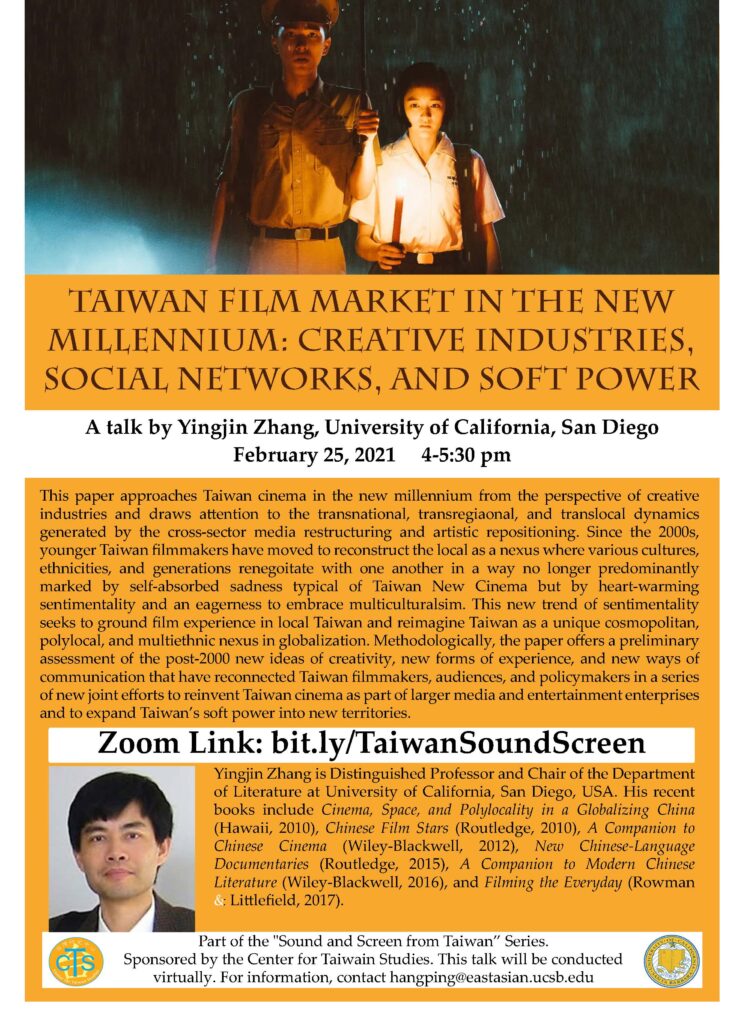
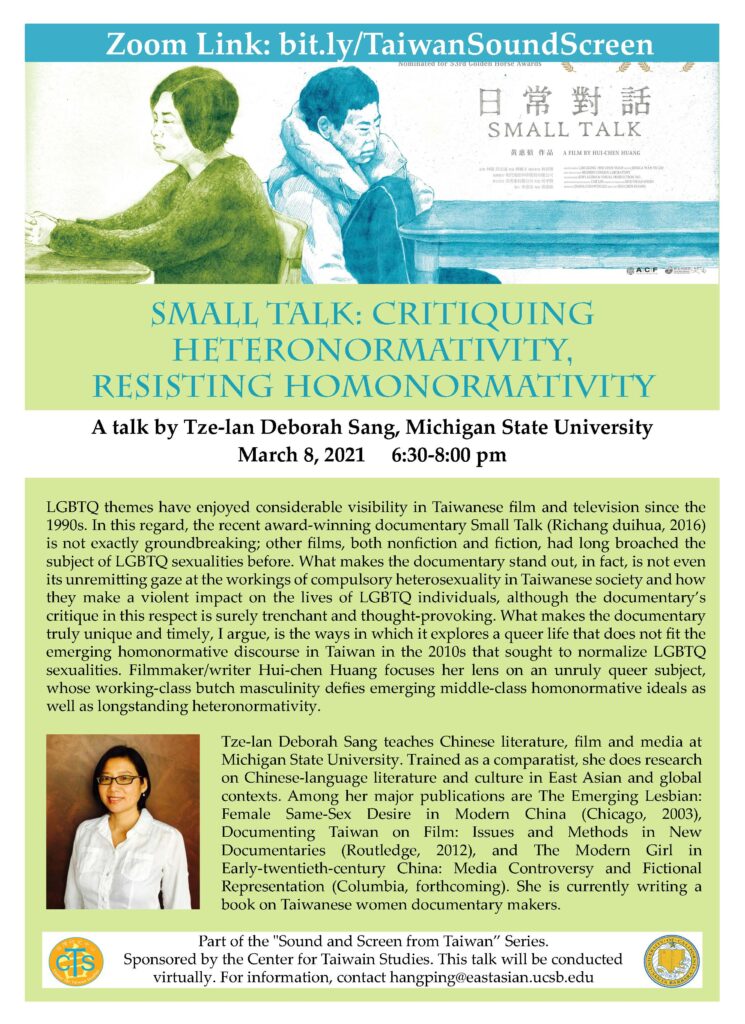
Prof. Hanpging Xu has helped put together a lecture series titled Sound and Screen from Taiwan under the sponsorship of the Center for Taiwan Studies as well as the Confucius Institute. For the Winter quarter, we have three exciting lectures lined up, respectively on February 17th (6:30-8:00 p.m.), February 25th (4:00-5:30 p.m.), and March 8th (6:30-8:00 p.m.):

  1. Professor Andrew Jones (Berkeley) will speak on pop diva Teresa Teng (邓丽君) and the sonic regime of geo-political affect and power across the Taiwan Strait.
  2. Professor Yingjin Zhang (UCSD) will take a sociological and culturalist approach to situate the Taiwan film industry in the context of globalization.
  3. Professor Tze-lan Deborah Sang (Michigan State University) will discuss Taiwanese documentary films through the lens of critical queer studies.

For more details, see the flyers below, visit our Events page, or contact Prof. Xu.

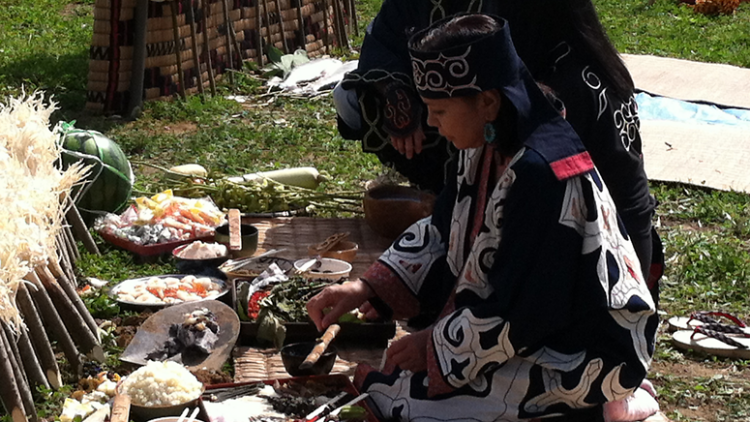
Image of an Ainu woman sitting on a mat outdoors

Faculty Talk: Ainu Indigenous Modernity in Japan: Bringing Our Ancestors Home by Ann-Elise Lewallen

Image of an Ainu woman sitting on a mat outdoors

Join Prof. Ann-Elise Lewallen on Wednesday, February 10, at 5:30pm Pacific Time, as she delivers a guest lecture for the University of San Francisco on “Ainu Indigenous Modernity in Japan: Bringing Our Ancestors Home.” Event Description:

The USF Center for Asia Pacific Studies welcomes Dr. ann-elise lewallen (University of California, Santa Barbara) for an examination of Ainu colonial reckoning and eventual repatriation that unmasks the ongoing violence of settler colonialism in Japan and the ways that honoring kin relations and ancestral places enables a healing process to begin.

In Japan, Ainu experiences of Indigenous modernity have been shaped by a trifecta of settler colonialism, violent interruption of Ainu kin relations with land, and severed kin ties with birth communities due to urbanization and economic pressure. From the mid-19th through 20th century, the Japanese state instituted assimilation policies reinforcing racialization of Ainu bodies as distinct from ethnic Japanese. Thousands of Ainu ancestors were robbed from their resting places to be used for research into “evolutionary origins.” From 2016, while courts ordered repatriation of some ancestral remains, roughly 1,676 Ainu remains were still held in Japanese universities. Meanwhile, in 2020 the Japanese government opened its National Ainu Museum (Upopoy), consolidating all domestic Ainu remains under one roof. Contestations for how ancestors should be memorialized and honored oscillate between two poles. On the one hand, some Ainu communities have employed legal modernity using settler tools like the courts to repatriate ancestors. In contrast, others advocate to continue genetic research on these ancestors and thus boost Ainu indigeneity, which invokes a bio-genetic modernity. This talk explores how Indigenous modernity through bio-genetic tools such as DNA and blood testing has been pitted against legal and political tools of modernity such as backing indigenous sovereignty through the UN Declaration on Indigenous Rights, and centrally, self-determination over Ainu ancestors themselves.

ann-elise lewallen is an engaged anthropologist and Indigenous rights advocate. Her research focuses on aid diplomacy, environmental politics and indigenous sovereignty in contemporary Japan and Asia. In her 2016 book, The Fabric of Indigeneity: Ainu Identity, Gender, and Settler Colonialism in Japan (SAR and UNM Press), lewallen engages with Indigenous Ainu women’s production of textile-based clothwork, arguing that it serves as an idiom of resistance against ongoing Japanese settler colonialism. In her current research, lewallen invokes an environmental justice framework to understand how Indigenous communities use embodied practices and Traditional Ecological Knowledge to shape energy development in Japan and India.

To RSVP, please visit https://www.usfca.edu/event/2021-02-10-1730/ainu-indigenous-modernity-japan-bringing-our-ancestors-home
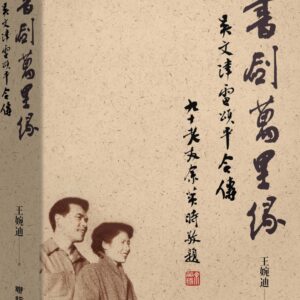
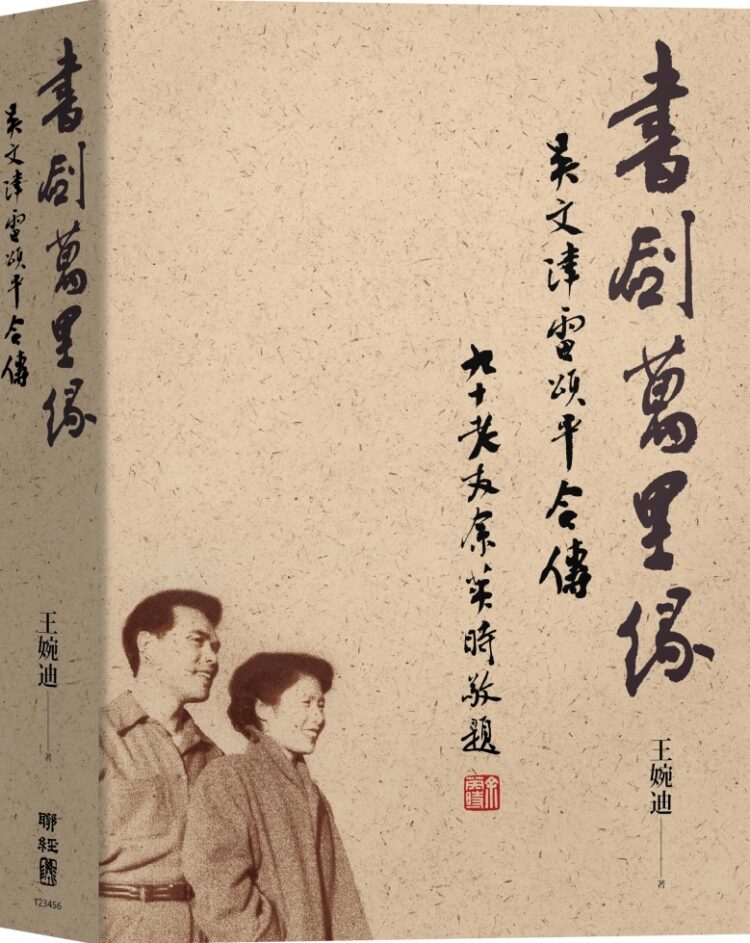
Cover of Wandi Wang's book

New Graduate Student Publication: Book on Eugene Wu and Song P’ing Lei

Cover of Wandi Wang's book

Congratulations to Wandi Wang, one of our stellar graduate students, on the publication of her book about Eugene Wen Chin Wu and his wife Song P’ing Lei. Wu was one of the pioneers who helped establish East Asian libraries in the United States after the Second World War.
See the description on Linking Publishing’s website for more information: https://www.linkingbooks.com.tw/LNB/book/Book.aspx?ID=178163&vs=pc.
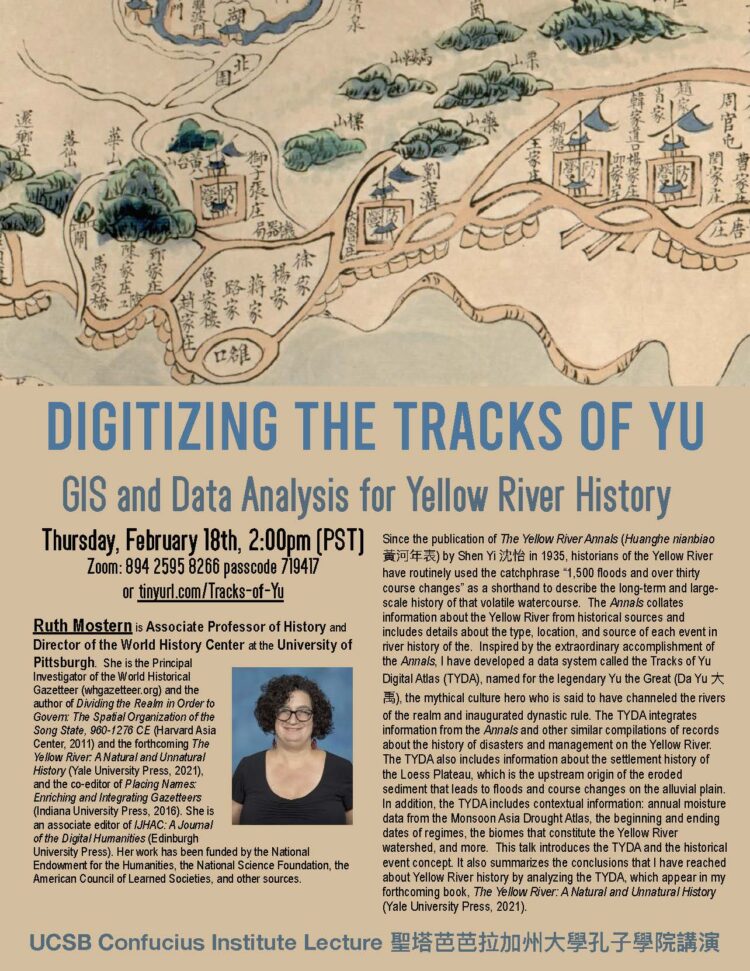
Poster for lecture, "Digitizing the Tracks of Yu" by Dr. Ruth Mostern

“Digitizing the Tracks of Yu” Lecture with Dr. Ruth Mostern, Feb. 18, 2pm

Poster for lecture
Please join us for a lecture with Dr. Ruth Mostern to learn about GIS and data analysis for Yellow River history.
“Digitizing the Tracks of Yu: GIS and Data Analysis for Yellow River History”
Thursday, February 18, 2021    2:00pm (PST)
tinyurl.com/Tracks-of-Yu (Zoom: 894 2595 8266 passcode: 719417)
Since the publication of The Yellow River Annals (Huanghe nianbiao 黃河年表) by Shen Yi 沈怡 in 1935, historians of the Yellow River have routinely used the catchphrase “1,500 floods and over thirty course changes” as a shorthand to describe the long-term and large-scale history of that volatile watercourse.  The Annals collates information about the Yellow River from historical sources and includes details about the type, location, and source of each event in river history of the.  Inspired by the extraordinary accomplishment of the Annals, I have developed a data system called the Tracks of Yu Digital Atlas (TYDA), named for the legendary Yu the Great (Da Yu 大禹), the mythical culture hero who is said to have channeled the rivers of the realm and inaugurated dynastic rule. The TYDA integrates information from the Annals and other similar compilations of records about the history of disasters and management on the Yellow River. The TYDA also includes information about the settlement history of the Loess Plateau, which is the upstream origin of the eroded sediment that leads to floods and course changes on the alluvial plain. In addition, the TYDA includes contextual information: annual moisture data from the Monsoon Asia Drought Atlas, the beginning and ending dates of regimes, the biomes that constitute the Yellow River watershed, and more.  This talk introduces the TYDA and the historical event concept. It also summarizes the conclusions that I have reached about Yellow River history by analyzing the TYDA, which appear in my forthcoming book, The Yellow River: A Natural and Unnatural History (Yale University Press, 2021).