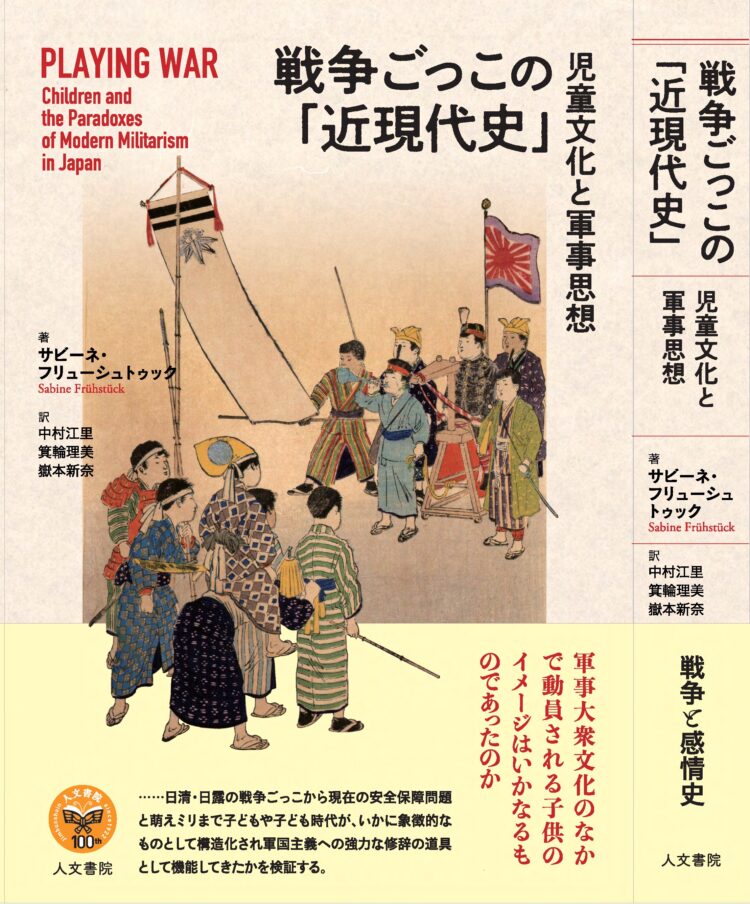
The Japanese translation of Sabine Frühstück’s book, Playing War (University of California Press, 2017) is now out from Jinbun Shōbo, Kyoto, 2023. 『「戦争ごっこ」の近現代史—児童文化と軍事思想』

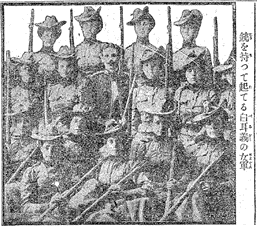
The Japanese translation of Sabine Frühstück’s book, Playing War (University of California Press, 2017) is now out from Jinbun Shōbo, Kyoto, 2023. 『「戦争ごっこ」の近現代史—児童文化と軍事思想』
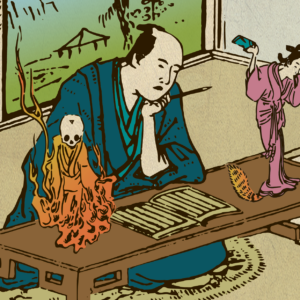
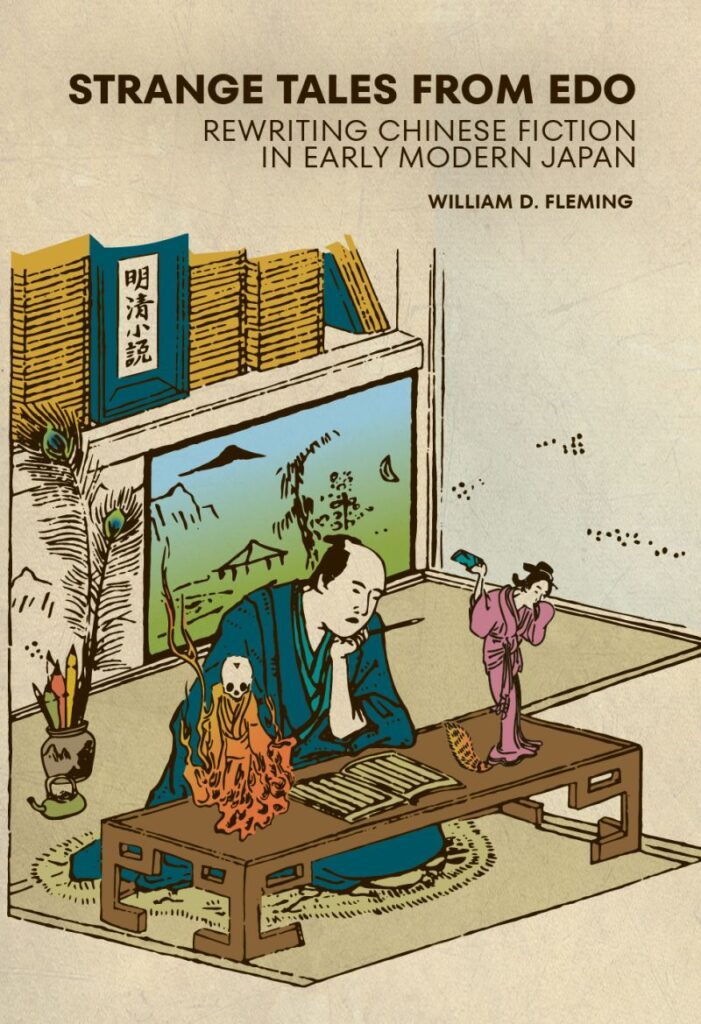
Strange Tales from Edo paints a sweeping picture of Japan’s engagement with Chinese fiction in the early modern period (1600–1868). Large-scale analyses of the full historical and bibliographical record—the first of their kind—document in detail the wholesale importation of Chinese fiction, the market for imported books and domestic reprint editions, and the critical role of manuscript practices—the ascendance of print culture notwithstanding—in the circulation of Chinese texts among Japanese readers and writers.
Bringing this big picture to life, Fleming also traces the journey of a text rarely mentioned in studies of early modern Japanese literature: Pu Songling’s Liaozhai zhiyi (Strange Tales from Liaozhai Studio). An immediate favorite of readers on the continent, Liaozhai was long thought to have been virtually unknown in Japan until the modern period. Copies were imported in vanishingly small numbers, and the collection was never reprinted domestically. Yet beneath this surface of apparent neglect lies a rich hidden history of engagement and rewriting—hand-copying, annotation, criticism, translation, and adaptation—that opens up new perspectives on both the Chinese strange tale and its Japanese counterparts.
During the summer of 2023, the first cohort of graduate students served as Interns in Japanese institutions. These Internships were generously funded by the Ogawa Gift Fund and UC Santa Barbara’s Graduate Division.
Hanne Deleu, second-year PhD student in EALCS, reports that “as an Intern for the Journal of Asian Humanities at Kyushu University (JAH-Q), I helped the journal’s editors with increasing their outreach to a larger and more diverse academic community around the world, proofread submissions, updated the journal’s website, and assisted with preparing the journal’s next editions. In turn, this Internship provided me with the opportunity to expand my professional network in Japan, gave me access to archival materials crucial for my dissertation project, and allowed me to hone my editing skills. I can’t more highly recommend to other students such an opportunity to delve into the professional side of academia, learning about and contributing to the production of a journal at the interface of the Japanese and international academic worlds.”
Raymond Katsuki Chung, second-year PhD student in EALCS, interned at the Center of the Tokyo Raids and War Damage, a museum in Tokyo dedicated to the memorialization and study of the American firebombing air raids on Tokyo during World War II. Raymond reports that he was delighted to “assist with expanding the museum’s accessibility to non-Japanese speaking visitors, translate exhibition placards from Japanese, and provide guided English-language tours to a diverse population of visitors. I also moderated a Summer Vacation special event for schoolchildren and participated in planning meetings for Japanese university student trainees organizing their own temporary exhibits. I gained valuable insights on how knowledge might be presented to the general public in a non-academic setting and was honored to work under the direction of Director Yoshida Yutaka, a leading historian of World War II.”
EALCS is proud to congratulate Linshan Jiang for earning her Ph.D. and moving to a postdoc at Duke University! Way to go Linshan!!

Huge congratulations to Sophia Shi who just earned her MA and is entering the Princeton Ph.D. program in Religion! We know Sophia will do GREAT!

We celebrate the 2022 Mochizuki award winners, Dr. Akiyo Cantrell and Aidan Pedersen. Congratulations!

The Journal of Japanese Studies is excited to welcome Sabine Frühstück as new coeditor (with Morgan Pitelka). Sabine has been a regular contributor to JJS (and a member of its boards) since submitting her coauthored article on the normalization and management of violence in Japan’s armed forces in 2000 (if not before), and we look forward to her new contributions to JJS. JJS is also deeply grateful to Janet Hunter for her service as coeditor since 2015 and particularly for her commitment to supporting early-career scholars and to the interdisciplinary JJS readership.
————————————————————————————————–
Established in 1974, the Journal of Japanese Studies is a multidisciplinary and interdisciplinary forum for communicating new information, interpretations, and research on Japan. Its core objective is to maintain an enduring record of highest-quality and evidence-based scholarship through the publication of empirical and interpretive work on Japan.